
Critically Speaking
An Introduction...

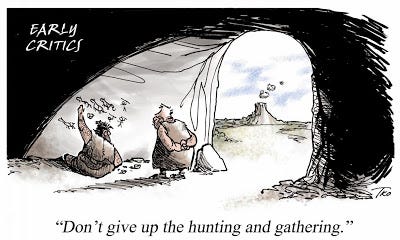
Recently, I watched Life Itself, a documentary about film critic Roger Ebert directed by Steve James (Hoop Dreams). It seemed timely as I start my own Substack here offering film essays, and yes, critiques. I’ve always been interested in the tension between critic and artist. Most see a critic as someone who can’t be a musician or a filmmaker or a writer and has to resort, often bitterly, to critiquing those who are. What better representation do we have than Salieri in Milos Forman’s 1984 film, Amadeus:
All I wanted was to sing to God. He gave me that longing... and then made me mute. Why? Tell me that. If He didn't want me to praise him with music, why implant the desire? Like a lust in my body! And then deny me the talent?
Then we have Theodore Roosevelt’s even more scathing critique:
It is not the critic who counts; not the man who points out how the strong man stumbles, or where the doer of deeds could have done them better. The credit belongs to the man who is actually in the arena, whose face is marred by dust and sweat and blood; who strives valiantly... his place shall never be with those cold and timid souls who neither know victory nor defeat.
Is a critic nothing more than a "cold and timid” soul: destined to looking but not doing; telling but not showing? Truth be known, I have my own critique of critics, particularly film critics. For one, the experience of watching a movie is meant to be personal which is why theaters function best when dark and quiet. Nothing illustrates film viewing’s inherent subjectivity more clearly than when two well-informed film critics see the same movie, like a Siskel and Ebert, yet have the exact opposite opinion. How is this possible? Two sportswriters may differ as to whether Tom Brady or Patrick Mahomes is the better quarterback, but neither would say one was terrible. What’s the difference with film criticism? Is it because sportswriters have objective, factual measuring points like statistics, wins, losses, championships, and a hundred other categories? Movies, on the other hand, operate in a mostly personal, psychological space, which is why a purely objective analysis of a film always seems a bit tone-deaf. Is the function of the film critic then absurd? A complete stranger telling you what to feel about your own personal experience?
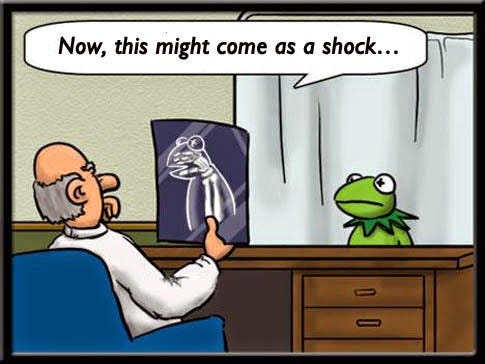
Of course, we should make a distinction between the film critic and the film essayist. The essayist assumes you've already seen the film in question and will delve into its technique, themes, and potential meanings. However, in doing so, the essayist runs into an even more complicated problem. A problem best illustrated through this quote by E.B. White: “Explaining a joke is like dissecting a frog. You can see how it works but you have to kill it first.” Isn’t this the minefield for anyone interested in discussing (dissecting) a work of art? Yes, you may understand it, but only after you’ve choked out all of the life and vitality that made it special in the first place.
So then the question is- Why venture into the minefield in the first place? Why not just enjoy the film within the subjective and personal space intended, without wasting time writing (or reading) about it? It's an important question. The reason I write about film is probably best stated in a quote by C.S. Lewis, or at least a quote written by William Nicholson and spoken by Anthony Hopkins playing C.S. Lewis, in the 1993 film Shadowlands: “We read to know we’re not alone.” Doesn’t one also write to know he’s not alone, (or if he’s a glass-half-empty person) to see if he’s indeed, alone? Watching a film or reading a book may be a private affair, but should it remain so? At what point should this private experience be shared? For further clarification, let’s look at C.S. Lewis’ description of friendship (the actual C.S. Lewis this time) from his book The Four Loves:
Friendship arises... when two or more of the companions discover that they have in common some insight or interest or even taste which the others do not share and which, till that moment, each believed to be his own unique treasure or (burden). The typical expression of opening Friendship would be something like, 'What? You too? I thought I was the only one.' Lewis, C.S. (1960; 1988). The Four Loves. (p. 65). Harvest/HBJ.
Writing and reading criticism is nothing more than an indirect way of saying: “What? You too?” Writing takes a mostly private experience, and, in turn, makes it public. When I was in college, a friend saved money and went to Europe by himself for the summer. When he returned to school that fall, he told me about everything he did and saw, and how great of an experience it was. However, the more we talked, he said in some ways, none of it felt like it actually happened because no one was there to share it with him. Perhaps this is the best reason of all to write criticism- it reifies one's personal experience with art. It makes it actually happen.
While this may be a good reason to venture into the minefield, what are we going to do once we get there? We still have to resolve how one analyzes something without choking the life out of it. As a teacher, I was always attempting to create a personal moment between the student and the text. To assist with this, I would often share how I myself connected to the stories we were reading. For instance, after we would read The Old Man and the Sea, I would mention how as a boy during my Christmas breaks from school, I would always stay a few days with my grandparents. I mentioned how I understood the boy's affection and concern for Santiago because it reminded me of how I felt towards my grandfather. He wasn't a fisherman, but he was a farmer and during particularly cold winters in the Oklahoma panhandle, he would have to get up at 4 a.m. and drive out to his land where his cattle were and break up the ice in their drinking troughs. I remember occasions when I would be in bed, barely awake, hearing the wind howling outside and my grandfather shuffling about in the other room, putting on his Dickey's overalls and his muddy boots, slipping out the backdoor, and driving away in his noisy Ford pickup.
My intent was to help them intertwine what we were reading with their own life and their own stories. Yet, despite my attempts, I noticed it was rare for students to create any such reference points. Usually, the only interaction the student truly had with a text was within the context of passing a reading quiz or writing an essay. In other words, the interaction seldom left the classroom. Instead of taking the characters or stories with them, they usually left them behind much in the same way they'd leave books in their lockers overnight. Walker Percy discusses this very dilemma in his essay, "The Loss of the Creature" and offers a possible reason as to why it occurs:
The educator whose business it is to teach students biology or poetry is unaware of a whole ensemble of relations which exist between the student and the dogfish and between the student and the Shakespeare sonnet. To put it bluntly: A student who has the desire to get at a dogfish or a Shakespeare sonnet may have the greatest difficulty in salvaging the creature itself from the educational package in which it is presented…. The new textbook, the type, the smell of the page, the classroom, the aluminum windows and the winter sky, the personality of Miss Hawkins—these media which are supposed to transmit the sonnet may only succeed in transmitting themselves…. The educator is well aware that something is wrong, that there is a fatal gap between the student’s learning and the student’s life. (pp. 56-57).
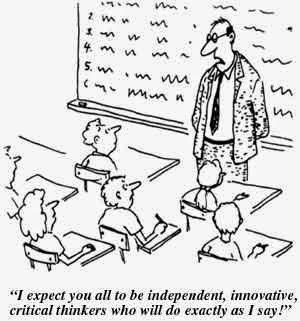
In many ways, this passage by Percy is dealing with the same problem as E.B. White’s quote about a joke. The critic or teacher must analyze something, yet still allow the reader or student to experience it afresh, in his or her own way. Percy realizes this is no small task because the “media” (or way something is presented) often interrupts the process. The “fatal gap” Percy mentions here is that one may seemingly have the perfect environment through which to dissect a dogfish or read a sonnet, yet the experience will likely remain compartmentalized, vacuum packed, within the classroom, entirely separate from one’s own life. In other words, the experience will never become a personal experience.
As a film essayist, I run into the same dilemma by taking a work of art which I, and I assume the reader, have already experienced personally. I then make the experience public by writing about it, all the while, hoping it still remains personal both for me and the reader. Again, no small task. One simple way to solve this problem is to actually not have an opinion about a particular film (or at least, not an opinion in the traditional sense). Unlike sportswriters, film critics should not be interested in whether a film wins or loses. A critic should be more interested in a film’s process or way a film obtains meaning and not just the meaning itself. A critic can best analyze a film not by offering a final judgement, but instead, by expressing what meaning was obtained within the personal, subjective space from which the critic viewed the film. With this, the critic is hopefully able to dissect the frog without killing it; to analyze it yet keep it alive at the same time. Percy’s essay provides a nice metaphor where this occurs:
One remembers the scene in The Heart Is a Lonely Hunter where the girl hides in the bushes to hear the Capehart in the big house play Beethoven. Perhaps she was the lucky one after all. Think of the unhappy souls inside, who see the record, worry about scratches, and most of all worry about whether they are getting it, whether they are bona fide music lovers. What is the best way to hear Beethoven: sitting in a proper silence around the Capehart or eavesdropping from an azalea bush? (60). Percy, Walker (2011-03-29). The Message in the Bottle (p. 60). Open Road Media. Kindle Edition.
Isn’t this a nice strategy for a critic as well? A strategy not interested in getting it or having readers get it. A critic who, like the girl above, avoids the big house altogether? Come join me through this Substack. We’ll sit together and listen to the music through the open window. When we feel like talking about it, we can. When we don’t, we can just keep listening together.